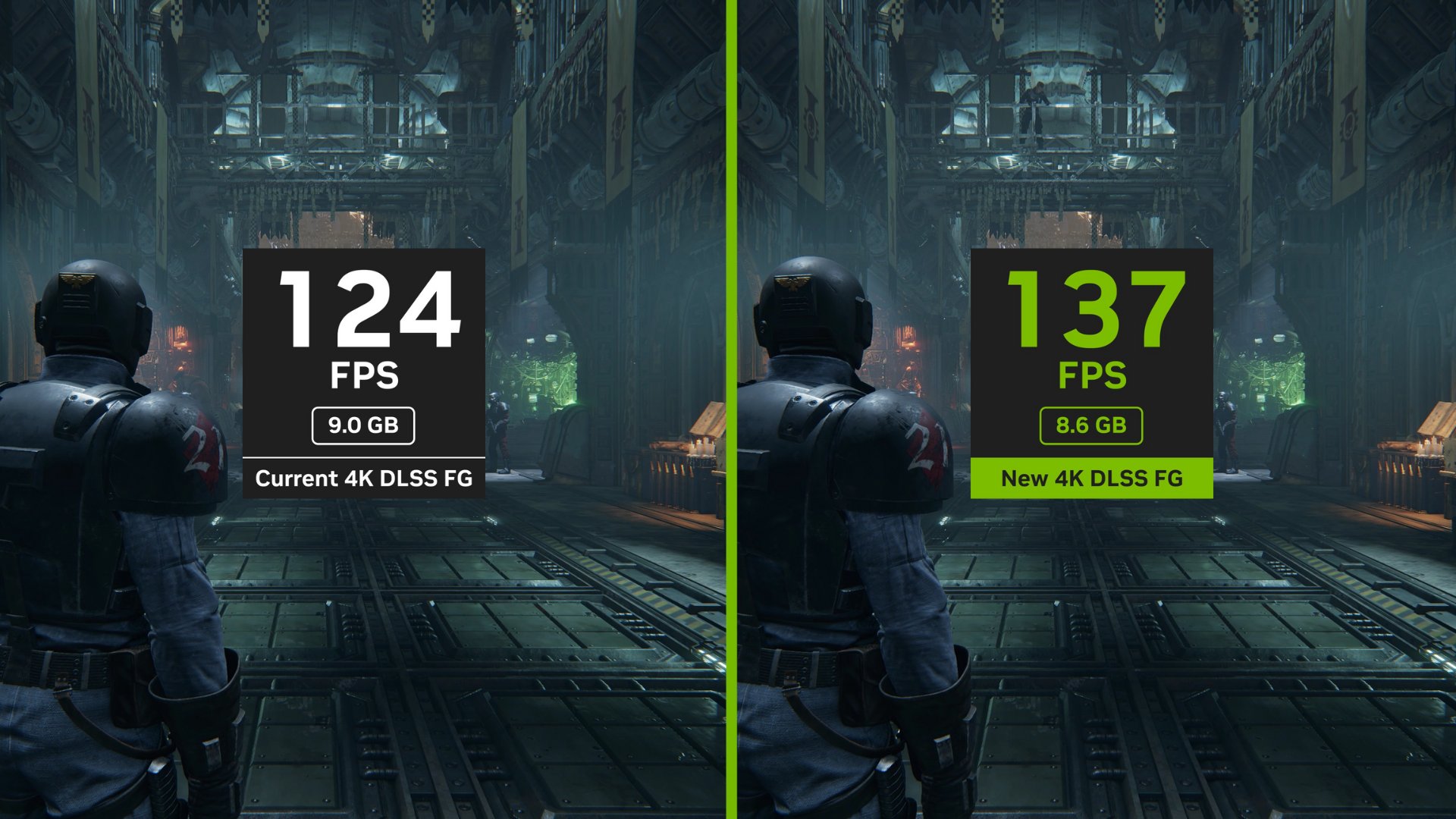
Whenever there’s a new graphics card generation, everybody always gets excited about how it’ll perform, especially compared to the previous version. But in recent years, the most significant leap forward hasn’t come from raw hardware horsepower. Instead, it comes from innovative technology that extends performance beyond traditional rendering in frame generation.
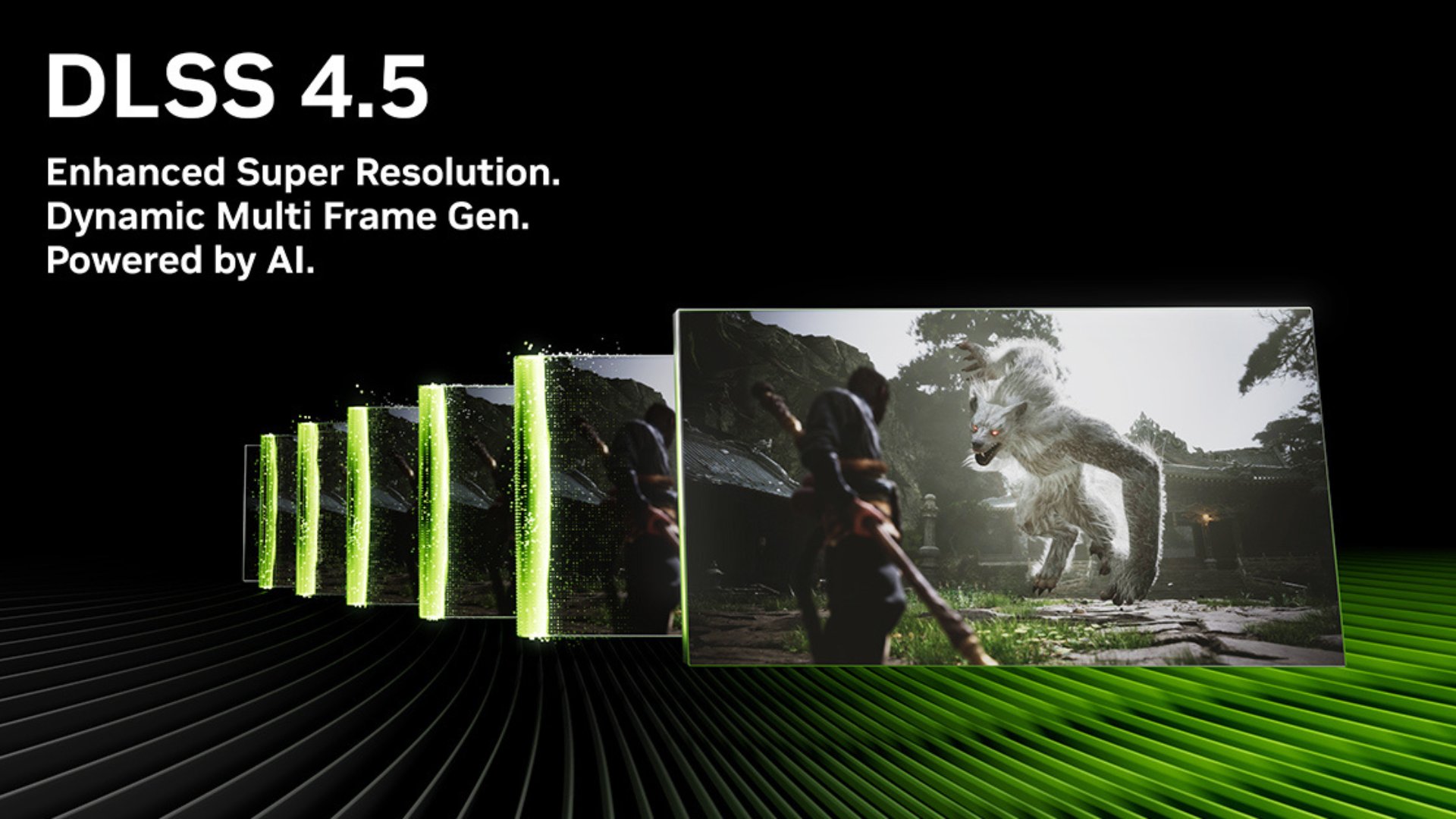
Before NVIDIA’s RTX 40-series GPUs launched, some gamers joked that future versions of DLSS might not just sharpen resolution, but also magically generate extra frames. Then DLSS 3 arrived, and that actually seemed to be the case. Instead of simply upscaling images, DLSS 3 began creating new frames, resulting in dramatically smoother-feeling graphics that don’t rely solely on brute-force GPU rendering.
The result is one of the most talked-about advancements in gaming technology today. Learn more about what frame generation is, and why it’s so valuable for building a high-quality gaming PC like our iBUYPOWER systems.
The Basics: What Is Frame Generation?
Frame generation is a technology that uses artificial intelligence to create additional frames between the ones typically rendered by the GPU. Instead of drawing everything manually, the GPU renders a standard frame, analyzes the scene motion, and then generates a new “predicted” frame that fits between them. This “predicted frame” makes the game appear smoother and causes frame rates to skyrocket without the GPU doubling its workload.
It’s overall a pretty simple concept. You get better, more brilliant rendering rather than more complex rendering that’ll clog up your system’s power and lead to potential bottlenecks. Paired with image-upscaling tools like NVIDIA DLSS or AMD FSR, frame generation acts like getting a free performance boost without needing an expensive upgrade.
For players running graphically intensive titles at high resolutions, it can be the difference between choppy 45 FPS and silky 90+ FPS. And you can get all of that without sacrificing visual effects or ray tracing.

How Does Frame Generation Work?
Traditional rendering draws each frame one by one, but frame generation disrupts that model. Instead of fully rendering every single frame, technologies like DLSS Frame Generation and FSR 3 use motion data, also called motion vectors, to predict what the next frame should look like. They then insert an AI-generated frame right into the sequence.
Right now, NVIDIA’s approach is currently the most technically advanced, thanks to the Optical Flow Accelerators built into RTX 40-series GPUs. These dedicated processors track fine detail, like shadows shifting, reflections rippling across puddles, or objects moving through dense particle effects. With these details, the GPU then feeds precise motion data to the AI model to generate a frame that blends in perfectly with the real ones.
In games that support it well, movement becomes strikingly uniform. Motion feels fluid, frame pacing improves, and high resolutions no longer demand enormous GPU power to maintain responsiveness. That’s why iBUYPOWER’s top-tier gaming PCs feature NVIDIA GPUs. You get better graphics for better gameplay.
Is Frame Generation Worth It?
When frame generation first came out, early tech reviews were mixed. Some reviewers warned about potential downsides, such as subtle latency or occasional visual oddities when slowing footage down and zooming in on details. Testers described how 60 FPS might “feel more like 30 FPS” when input lag came into play, especially in fast, competitive game titles.
However, once it hit the market and gamers began using it in their own gaming sessions (especially in single-player or cinematic games), it’s been a completely different story. Once implemented in actual gameplay, these frame generation systems proved surprisingly effective. Many games exhibit minimal latency, and in some titles, the input delay is almost imperceptible without measurement tools.
Perhaps most importantly, it significantly improves frame pacing, or how consistently frames are delivered. A game needs a high frame rate, along with each frame arriving at evenly timed intervals. Frame generation often produces a smoother feel than raw FPS numbers suggest, resulting in more fluid, stable gameplay, even in demanding games.
For players who value visual quality, frame generation has quickly become a must-have tool.
How Frame Generation Could Shape the Future
At this point, frame generation is still evolving. The best implementation right now is heavily tied to newer hardware, such as NVIDIA’s RTX 40-series GPUs, which limits adoption. But as technology matures, it’s easy to imagine how transformative it could be for more platforms, even for game consoles.
Most modern consoles already rely heavily on reconstruction technologies, dynamic resolution scaling, and temporal upscalers to achieve steady performance. Adding frame generation here could deliver an even more substantial performance boost without major hardware redesigns. The idea of smoother console gaming with consistent frame pacing and higher effective frame rates could easily become a standard expectation.
Frame Generation: A New Era of Performance
Frame generation marks a shift in how to achieve better PC game performance. Instead of pushing raw power to its limits, smart rendering leverages AI to deliver smoother gameplay for improved frame pacing and dramatically higher effective frame rates, especially at higher resolutions.
No matter how you view generated frames, whether you see them as “fake” or innovative, the results speak for themselves. The games using this new technology look smoother, feel better, and run at previously unreachable settings. For anyone who enjoys visually rich single-player experiences, frame generation is a meaningful upgrade in how modern games operate.
If the present is already this impressive, the next generation of gaming, especially if gaming consoles adopt frame generation, may make today’s performance dreams look small. Making the future not just faster but also smarter.
If you want the best visual experience when immersing yourself in your favorite gaming worlds, then iBUYPOWER has your back. With options like our pre-built gaming systems or our customizable build-it-yourself rigs, we use high-quality GPUs from trusted companies like NVIDIA to deliver the best graphics performance. We also offer support if you need help with building your first PC or troubleshooting any issues.
If you’re in the market for a new PC, check our iBUYPOWER coupons page or our daily deals page for the newest discounts.
To stay updated on all things iBUYPOWER follow us on our socials:
Instagram iBUYPOWER
Facebook iBUYPOWERPC
TikTok @iBUYPOWER
Reddit /r/iBUYPOWER
Discord iBUYPOWER